

I heard the news today * Bowie band to perform in Scotland; Holy Holy’s last tour; Outside Record Store Release; Bowie Nights; Yuki Numata Resnick Interview; “Five Years” cover AND MORE!
Welcome to my weekly roundup of Bowie news! Read on for summaries of Bowie-related stories that posted this past week, and click on the bolded story names to link to the original articles…
—
NEWS
Bowie band to stage Loch Lomond tribute for charity. Cameron House, a hotel on the shores of Loch Lomond in Scotland about 20 miles northwest of Glasgow, will host Bowie: Live on the Loch on November 7 and 8 to mark ten years since Bowie’s passing, featuring members of his Glastonbury 2000 band in a benefit for Save the Children.
Holy Holy to bring The Final Tour – A Celebration of Bowie to Dublin and Belfast. Holy Holy, featuring Bowie collaborators Woody Woodmansey and Tony Visconti alongside Glenn Gregory, will bring The Final Tour – A Celebration of Bowie to Dublin and Belfast, performing iconic songs from Bowie’s catalogue as part of a project launched in 2021 to honor his legacy, with Woodmansey emphasizing the continued power of Bowie’s music and the significance of this moment amid recent exhibitions, preservation efforts, and the anniversary of Bowie’s death.
Remastered 1. Outside slated for Record Store Day release. About 15 years after the Berlin trilogy, Bowie reunited with Brian Eno on 1. Outside, a character-driven dystopian concept album shaped by their shared interest in operating at the edge of the mainstream and featuring songs like “Hallo Spaceboy” and “Strangers When We Meet,” now remastered for a new vinyl release.
Home where young Bowie dreamt of ‘fame’ to open to public. This isn’t really new news, but the story appears to be a genuine and original piece of journalism, so in case you missed it I am including this in the news section. Several versions of this appeared in multiple news outlets, so, while I think this is an original piece of writing I am not 100% sure this was its original venue.
Third Eye Blind covers “Heroes.” Third Eye Blind reflects that performing Bowie’s song with Elle King deepened their appreciation of his brilliance and suggests the song feels especially relevant now, while the exclusive Amazon Music release precedes their Stagecoach appearance alongside other performers including Michael Marcagi, who has also released a collaborative cover.
Artemis II Astronauts Woke Up to One of Rock’s Greatest Collabs in History. The Artemis II crew included Bowie’s “Under Pressure” among their daily wake-up songs, with each astronaut contributing selections to a playlist that NASA later shared publicly on Spotify.
Bowie Nights: A groundbreaking new show. Lightroom announces BOWIE NIGHTS, a series of cross-disciplinary events from May to September 2026 at its King’s Cross venue celebrating Bowie’s life and influence through artists like Anna Calvi, Jonathan Barnbrook, and Adam Buxton alongside the opening of David Bowie: You’re Not Alone.
Inside an immersive new David Bowie exhibition at Lightroom. Related to the above, a David Bowie: You’re Not Alone will open at Lightroom in London on April 22, with creator Mark Grimmer aiming to present a deeper understanding of Bowie’s “true personality,” building on his earlier work as lead designer for the Victoria and Albert Museum exhibition Bowie Is.
FEATURES AND REFLECTIONS
Is Ye the (similarly controversial) David Bowie of his age? This is a paywalled article and I was only able to read the first two paragraphs. That said, I take the premise to be that the former Kanye West is controversial in part by making pro-Nazi statements, which on one level is similar to what Bowie did in 1975 and 1976. While I wish that Bowie had not made the statements he made, and while I am no expert on Kanye West, the difference seems to be that Bowie was not actually advocating a far-right political agenda. He was making transgressive art which, if anything, was commenting on the dangers of masses sheepishly following demagogues. “Ye” has taken actual, concrete steps to advance far-right politics, seems to actually be an antisemite, and seems genuinely admiring of Nazis and their ilk. Forgive me if I’m wrong because, like I said, I’m not an expert on “Ye.” But no, he’s not the David Bowie of his age.
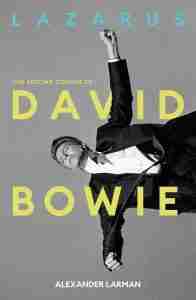
REVIEW: Lazarus: The Second Coming of David Bowie by Alexander Larman. Larman argues that Bowie had lost his near-genius consistency by the time of Tin Machine and was metaphorically “dead,” only to be artistically resurrected with Blackstar just before his actual death.
By bike to find meaning in a song, and in life too. Facing a midlife crisis after Bowie’s death, a devoted fan cycled the route of “Life on Mars?” while tracing Bowie’s history across Europe, ultimately finding purpose not in decoding the song but in embracing Bowie’s spirit of reinvention and self-determination.
Why people feel the world is less creative without Bowie. The sense that the 2020s are a worse decade reflects an emotional response to global crises and cultural unease, deepened by the loss of Bowie, whose absence symbolizes a break from a more imaginative and humane past. This reflection seems very familiar and might be a repackaged version of something that has appeared elsewhere.
Sad Secret Behind Bowie’s Chameleon-Like Character Changes. Bowie’s lifelong reinvention through personas like Ziggy Stardust and the Thin White Duke was deeply rooted in his relationship with his half-brother Terry Burns, whose struggle with schizophrenia and death profoundly shaped his creative identity.
Memories of the day you queued for tickets to see Bowie in Sunderland. This is a collection of photos from a local paper of fans lining up to buy Bowie concert tickets in 1987.
Michael C. Hall On What It Was Like Meeting Bowie. This is less an article than a link to a video of Hall discussing Bowie.
PROFILES
Amanda Lear. Amanda Lear recounts her life experiences—including her relationship with Bowie, whom she describes dismissively while recalling their affair and his open marriage—as part of a broader reflection on her unconventional relationships, time with Salvador Dalí, and personal losses.
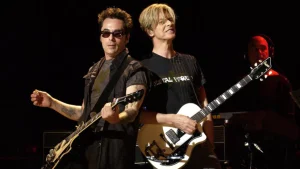
Earl Slick. Earl Slick recalls with humor that he initially thought Bowie was a “freak,” describing his unusual and solitary audition experience as equally strange when he was unexpectedly called in by Bowie’s management.
Daniel O’Mahony. Daniel O’Mahony names Bowie among his top artists and includes “Diamond Dogs” as one of his three favorite songs of all time alongside tracks by Frank Ocean and Nina Simone.
Tail of the Week. This “David Bowie” is a dog, up for adoption.
LISTS

The 10 Best Albums of the 1970s, Ranked. Bowie’s career spans from early achievements like “Space Oddity” through to the acclaimed Blackstar, but his strongest decade was the 1970s, highlighted by The Rise and Fall of Ziggy Stardust and the Spiders from Mars as his best album despite a turbulent period in his life.
Underrated David Bowie Songs. Because Bowie’s nearly 50-year career (1967–2016) produced radically different albums and songs, much of his music has been overlooked, so while hits like “Space Oddity” and “Golden Years” define him for casual listeners, fans recognize a deeper catalogue of underrated tracks that often go unnoticed.
8 Famous Deaths in 2016 That Shocked the World. Bowie was a constantly evolving and genre-defying artist whose five-decade career, including albums like The Rise and Fall of Ziggy Stardust and the Spiders from Mars and “Heroes” and culminating with Blackstar, established him as a global cultural icon whose influence endures long after his 2016 death from liver cancer in New York City.
The 10 Most Valuable Artist Music Catalogs (for Now). Bowie’s catalog, valued at about $250 million and acquired by Warner Chappell Music in 2022, spans from “Space Oddity” through Blackstar and reflects how his songs continue generating long-term revenue and are now treated as high-value assets through streaming and licensing.
3 Classic Rock Songs From the 1980s With Bridges We Adore. “Under Pressure” stands as a timeless Bowie collaboration with Queen from Hot Space whose bridge around the 2:30 mark shifts the song into a new emotional space that departs from its signature bass line and elevates its enduring impact.
10 classic albums from 1976 that would never be made today. Bowie’s Station to Station captures his full embodiment of the Thin White Duke and stands as a masterpiece created during a period of such severe addiction that he could scarcely remember making it, adding to its mystique and improbability.
We ranked the 15 greatest bands of the 1970s. Bowie’s 1970s run, supported by groups like the Spiders from Mars, established him as a cultural force whose shifting personas and fusion of music, fashion, and theatre produced one of the most creatively fertile periods in popular music, with Aladdin Sane as a key entry point.
THIS WEEK IN THIS BLOG

April 5: Last week’s news

April 6: David Bowie Cover of the Week: Khadhu Capanema sings “Five Years”
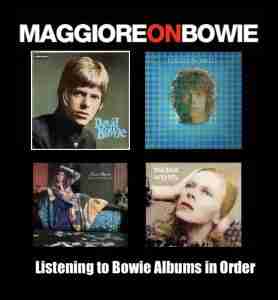
April 7: Listening to Bowie’s Albums in Order: David Bowie through Hunky Dory
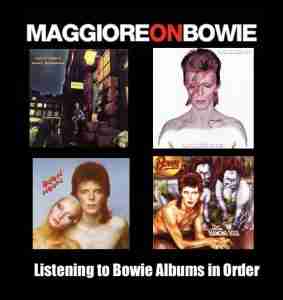
April 8: Listening to Bowie Albums in Order: Ziggy Stardust through Diamond Dogs
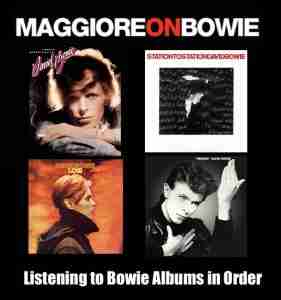
April 9: Listening to Bowie’s Albums in Order: Young Americans through “Heroes”

April 10: Bowie related symbols in the City of Buffalo Flag

April 11: Yuki Numata Resnick Building Community Through Art & Music
CHURNALISM
This section separates genuine Bowie news and original writing from recycled “churnalism” stories with vague click-bait headlines that often repeat familiar information but may still be of interest if readers have not seen them before.
The one musician David Bowie could never be. Bowie thrived on unfamiliar genres and artistic reinvention, and even at his most commercially accessible he rejected the everyman, blue-collar storytelling associated with Bruce Springsteen because he knew he could not authentically represent that perspective.
Berlin, Spider Man, and the U2 project David Bowie couldn’t stand. Bowie’s slide into late-1980s mediocrity after Let’s Dance and U2’s post-The Joshua Tree self-indulgence forced both into reinvention, with Bowie reclaiming artistic credibility through Tin Machine while U2 embraced irony and reinvention with Achtung Baby, even as their contrasting ambitions led to friction during their encounters at Berlin’s Hansa Studios.
Remembering David Bowie’s First No. 1 Single. John Lennon recalled meeting Bowie through Mick Jagger and joining him in the studio, where an intended cover evolved into the funk-driven “Fame,” a collaboration with Carlos Alomar that reflects Bowie’s frustrations with his former management and the realities of fame.
This 1970s Rock Icon Was Always 5 Steps Ahead. Bowie redefined music, fashion, and art through constant reinvention, embraced visionary creativity in anticipating the future, and overcame personal struggles while influencing generations and remaining ahead of his time.
The iconic David Bowie song he grew to hate performing. Constructing a live setlist required navigating sharp stylistic shifts across songs like “Space Oddity” and “I’m Afraid Of Americans,” and while crowd favorites such as “Heroes,” “Let’s Dance,” “Starman,” and “Rebel Rebel” were expected, Bowie grew uncomfortable performing “Rebel Rebel” as he aged, viewing its generational message as increasingly disconnected from his later artistic identity compared to songs like “TVC15” and “Station To Station.”
Bowie’s opinion on Neil Young. Bowie expresses deep admiration for Neil Young, seeing him as a vital, independent force keeping rock alive and as a songwriting mentor he looks to alongside Bob Dylan for guidance when facing challenges.
The nondescript birdwatching spot in Ohio where Elvis, David Bowie, and Bruce Springsteen once performed. One would be standing in what is now an overgrown Ohio meadow at the former site of the Richfield Coliseum, once a remote fortress-like venue that hosted major events including Bowie’s Sound + Vision tour in 1990 before closing in 1994.
The moment Slash walked in on his mother and David Bowie, naked. After his parents separated in the mid-1970s, Slash often accompanied his mother to work, where she collaborated with Bowie during his Thin White Duke era and The Man Who Fell to Earth, leading to a personal relationship that made Bowie a regular presence in his life.
Bowie Hid Clues in His Secret Musical Project That Changes What Blackstar Really Means. Bowie spent his final months researching the 1724 execution of Jack Sheppard for an unrealized musical called The Spectator, a project uncovered in his personal archive after his death, though he never explained its connection to his final album.
The genre David Bowie called “music of the 21st century”. This “article” is especially vacuous, even by “churnalism” standards. Its basic point seems to be that Bowie was at the forefront of Glam rock.
David Bowie and Queen’s cocaine-fuelled romp delivers ‘Under Pressure.’ Roger Taylor recalls Bowie proposing they stop jamming and write a song together, leading to the creation of “Under Pressure,” where Bowie and Freddie Mercury’s intense, intoxication-fueled vocal session was driven by John Deacon’s celebrated bassline.
The generational influence of David Bowie. Bowie’s 1970s output featured constant reinvention through personas like Ziggy Stardust and the Thin White Duke, albums such as The Rise and Fall of Ziggy Stardust and the Spiders from Mars, Aladdin Sane, Station to Station, Low, “Heroes,” and Lodger, and a lasting influence on rock, performance, and fashion that extended to later artists across multiple genres.
The one genre that became too boring for David Bowie. Looking across Bowie’s discography, the glam period peaks before he grows disinterested after Diamond Dogs and later abandons Tin Machine, but his most compelling work emerges with the Berlin Trilogy—Low, “Heroes,” and Lodger—where, driven by a need to escape predictability and his Thin White Duke persona, he experiments radically with Brian Eno and Tony Visconti, reshaping rock through unconventional structures and a renewed focus on artistic success.
The night David Bowie was quietly removed from Arctic Monkeys’ VIP section. Matt Helders recalls Bowie politely giving up his VIP seat without protest and later greeting the band backstage, reinforcing his humility and engagement with new music, while Alex Turner cites “Moonage Daydream” as a key influence on his shift toward more abstract songwriting that shaped Arctic Monkeys’ later work.
—
And with that, “we’ve finished our news…”*
—
*“I’ve heard the news today” is Bowie’s adaptation of the Beatles lyric, which is heard in “Young Americans.” **“We’ve finished our news” is a line from, “Oh You Pretty Things”