

I heard the news today…* KillerStar releases new single; Lexi speaks; “Pretty Things” cover; Keanan Duffty interview; plus features and reflections, profiles, lists and MUCH MORE!
Welcome to my weekly roundup of Bowie news! Read on for summaries of Bowie-related stories that posted this past week, and click on the bolded story names to link to the original articles…
—
NEWS

KillerStar Featuring Bowie Collaborators Release New Single “Rubicon.”. KillerStar preview their second album The Afterglow with the expansive single “Rubicon,” a progressive, Bowie-adjacent track built around themes of irreversible choice and featuring contributions from Earl Slick, Gerry Leonard, Mike Garson, Mark Plati, Emm Gryner, and The Webb Sisters, ahead of a March release and a high-profile London residency.
Iman and David Bowie’s Daughter Opens Up About Her Mental Health Struggles Alexandria “Lexi” Jones, Bowie’s daughter with Iman, spoke openly about her struggles with mental health, describing periods of treatment and how writing and music have become central to her ongoing healing and effort to define her own identity apart from her famous parents. I saw Lexi’s video last week and had thoughts about posting about it but decided against doing so and have mixed feelings even including this link. That said, it is a news story that has to do with David Bowie and has broken in many, many other outlets as well, so I’m including this link. At least at this point, I’m withholding my own comments.
Lexi Says She Does Not Blame Parents For Sending Her To Treatment. This is the follow-up to the above story. Alexandria “Lexi” Jones said she does not blame Bowie or Iman for sending her to treatment as a teenager, explaining that while the experience was painful and confusing, her parents were trying to help her during a period of severe mental health struggles, and her intention in speaking out was to foster understanding of the treatment system rather than assign fault to her family.
St John’s Wood chapel set for conversion into luxury apartments. Connaught House on St John’s Wood Terrace, a neoclassical building repurposed many times since 1841, became St John’s Wood Studios in 1957, where film and television projects were produced and music videos including Bowie and Mick Jagger’s “Dancing in the Street” and Queen’s “Radio Ga Ga” were filmed.
Bowie to feature in exhibition exploring pop culture fandom. Somerset House (in London) will present HOLY POP!, a summer exhibition curated by Tory Turk that explores modern fandom as a form of secular devotion through memorabilia and fan practices linked to figures including David Bowie, Princess Diana, Andy Warhol, and Nina Simone, culminating in a display centered on Nina Simone’s chewed gum collected by Warren Ellis and situating these rituals within broader themes of community, grief, and belief.
Gibson Custom releases limited recreation of Mick Ronson’s iconic Les Paul. Gibson Custom has released an ultra-limited 1968 Les Paul Custom Collector’s Edition that meticulously recreates Mick Ronson’s iconic Bowie-era guitar, accompanied by new interviews with family and collaborators reflecting on his lasting influence as a musician and artist.
NASA may have proved David Bowie lyric about Mars to be true. NASA’s Curiosity rover identified “boxwork” ridge formations on Mars that look like spiderwebs from orbit, and scientists say they likely formed when ancient groundwater deposited minerals in bedrock fractures—evidence that water (and therefore potential habitability) may have persisted later than expected, echoing the “spiders from Mars” idea associated with Bowie’s Ziggy Stardust era.
—
FEATURES AND REFLECTIONS

The problem with rewatching Top of the Pops. Top of the Pops became a defining force in British music culture by using highly visible television performances—such as Marc Bolan’s glittered “Hot Love,” Bowie’s Ziggy Stardust-era “Starman,” and Morrissey’s gladioli-wielding debut with The Smiths—to shape careers, influence the charts, and turn pop performance into a powerful engine of artistic identity and cultural change.

Book review: David Bowie and the Search for Life, Death and God by Peter Ormerod; Lazarus: The second coming of David Bowie by Alexander Larman. A reflection on two new Bowie books considers how Peter Ormerod foregrounds Bowie’s lifelong spiritual searching while Alexander Larman argues for the artistic and moral seriousness of Bowie’s later work, culminating in Blackstar as a final meditation on creativity, faith, mortality, and legacy.
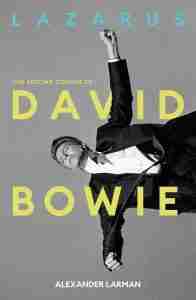
New books consider Bowie from new angles. Ten years after Bowie’s death, writers assessing his legacy reveal how generational experience shapes responses to his work while converging on the idea that Bowie stood apart from his peers by combining pop stardom with sustained intellectual curiosity, artistic risk, and cultural seriousness, qualities that now seem inseparable from a vanished set of social and media conditions that once allowed a single artist to exert such broad influence.

Mike Garson on David Bowie. Mike Garson reflects on his decades-long collaboration with Bowie, the grief and community that led him to organize the online “Just For One Day!” tribute during lockdown, standout performances by Perry Farrell and Gary Oldman, and his unique survival from the Ziggy-era band into the Philadelphia sessions that produced Young Americans, highlighting Bowie’s restless creativity and deep artistic relationships.
Bowie: Identity as Art and Philosophy. David Bowie’s enduring significance lies in his treatment of identity as something deliberately created and repeatedly revised rather than discovered or preserved, offering a demanding but liberating model of authenticity rooted in change, responsibility, play, and the courage to outgrow one’s own past.
Why isn’t 1983 remembered as one of Bowie’s great periods? After years of uneven U.S. success, Bowie deliberately embraced pop in 1983, ending his commercial slump with chart-topping singles, ubiquitous videos, and his biggest tour, a surge to global superstardom that left both him and his audience uneasy.
See Bowie’s career in photos. Not much of a story here, but if you would like to see some nice, captioned pictures of Bowie, click this link.
How David Bowie Became New York’s Favorite Adopted Son. This is a paywalled story, but if you have a subscription to the New York Sun, this is a link for you.
—
PROFLIES
Gorillaz. A review of Gorillaz’ album The Mountain argues that Damon Albarn continues working in the medium Bowie pioneered, blending global influences, shifting personas, and wide-ranging collaborations to create a record that balances futurism and nostalgia while engaging contemporary political themes.
Madeleine Haddon. A profile of curator Madeleine Haddon explains how the new David Bowie Centre at London’s V&A East Storehouse uses Bowie’s vast archive and an unusually open, hands-on museum model to connect younger audiences to Bowie’s creative legacy while reflecting Haddon’s broader commitment to rethinking how museums present art, history, and representation.
Gentry Lee. Starman is a documentary in which space engineer Gentry Lee recounts his life and work leading NASA’s Viking mission to Mars, explores the scientific search for extraterrestrial life and the influence of science fiction figures like Arthur C. Clarke and Carl Sagan, and ultimately concludes that despite his lifelong fascination with space, life on Earth is a miracle he regards as “paradise,” underscored by Bowie’s music at the film’s close.
—
LISTS
5 Classic Rock Songs From 1972 We’ll Be Blasting On Repeat. “Suffragette City,” driven by Mick Ronson’s guitar and a shout-along hook, blends glam-rock swagger with sexual innuendo and a sly nod to A Clockwork Orange, standing as one of the loudest, most enduring moments on The Rise and Fall of Ziggy Stardust and the Spiders from Mars.
15 Most Important Classic Rock Albums Of All Time. Released in 1972, The Rise and Fall of Ziggy Stardust and the Spiders from Mars introduced Bowie’s alien rock-star messiah as a fully realized theatrical narrative, combining Ronson’s hard-edged guitar with fearless explorations of identity, gender, and performance that permanently reshaped what a rock album—and a rock star—could be.
3 Self-Referential Classic Rock Songs From the 1980s. “Teenage Wildlife” is a self-referential Bowie song whose lyrics have been read as addressing imitators, fans, or his younger self, with Bowie himself suggesting it may reflect a conversation across time, making the pleasure lie in Bowie turning his gaze inward and singing about Bowie. Is it a coincidence that I made reference to this passage in the song in of my blog posts this week, or was the author of this list reading my site?
15 Greatest Classic Rock Albums Of The ’70s. Station to Station presents Bowie at a moment of radical transition, blending the Thin White Duke persona, European electronic influence, and American soul into a cocaine-shadowed but enduring work that balances avant-garde ambition with songs like “Word on a Wing” and “Golden Years” and solidifies his reputation as a forward-looking shapeshifter.
12 must-read publications. This is purely a list— virtually no text— but Woody Woodmansey’s Spider from Mars is included.
Five iconic albums made in Soho, London. Although framed through Bowie’s extraterrestrial Ziggy Stardust persona, the Ziggy album is rooted in early-1970s Soho, with its cover, recording location, and surrounding nightlife capturing the glam-rock energy, danger, and countercultural spirit that shaped both the character and the music.
6 Hit Songs Believed to Have Hidden Meanings. The piece surveys six famous songs that have attracted conspiracy theories or claims of hidden meanings—ranging from debunked backward Satanic messages and misheard lyrics to speculative political and prophetic interpretations—including Bowie’s “Five Years,” which some fans have improbably linked to Kanye West and later imagery from Blackstar despite more mundane historical and symbolic explanations.
17 rock icons who suddenly checked out of stardom. By 1976 Bowie escaped addiction and the Thin White Duke by relocating to West Berlin with Iggy Pop, embracing anonymity in a divided city that enabled him to abandon the funk of Young Americans and Station to Station and develop the experimental, electronic sound of the Berlin Trilogy—Low, “Heroes”, and Lodger.
—
THIS WEEK IN THIS BLOG

February 22: Last week’s news
February 23: David Bowie Cover of the Week: Sidecar Bob covers “Oh! You Pretty Things”

February 24: How did Bowie address fascism in his lyrics? Part 3: To be insulted by these fascists…
February 25: Ranking The Spaciness of Bowie’s Space Songs

February 26: Revisiting my Interview with Lisa Perrott on David Bowie and the Art of Music Video
February 27: Keanan Duffty, Slinky Vagabond and “Ad Astra”

February 28: Keanan Duffty on working with Bowie, Fashion and Slinky Vagabond
—
CHURNALISM
Some online publications regularly recycle stories with little original reporting, a practice often called “churnalism,” driven more by digital publishing pressures than independent newsgathering. These pieces typically use vague, click-bait titles that withhold a key detail, only to reveal something readers already know. Many such stories involve Bowie. This section is my attempt to distinguish that material from genuine news and original writing, while acknowledging that even recycled stories may still be of interest, especially if news to you.
The most devastating guitar playing David Bowie ever head. Bowie praised Stevie Ray Vaughan as “the greatest of the new blues guitarists,” admiring his devastating, feel-driven playing and placing him alongside Mick Ronson as an example of Bowie’s deep respect for blues-based guitar work and musicianship.
David Bowie Loved This Hypnotic Sci-Fi Movie So Much That He Wrote A Song Based On It. Bowie said “Space Oddity” was directly inspired by Stanley Kubrick’s 2001: A Space Odyssey, drawing on the film’s cosmic scale and existential isolation to shape Major Tom’s story, even as the song was ironically adopted by the BBC during the Apollo 11 Moon landing broadcast.
The singer Bono considered a God-like genius. Bono recalled nearly taking Bowie’s eye out with the brim of his hat when they first met, calling him a “God-like genius” whose career, creative fearlessness, and Berlin-era reinvention later directly shaped U2’s own artistic turn on albums like Achtung Baby.
The only singer Bowie said beat him at his own game. Bowie said that Marc Bolan beat him to the punch in bringing glitter and glam to the mainstream, acknowledging that Bolan’s success with T. Rex in the early 1970s realized a vision Bowie himself had been nurturing and briefly left him feeling both admiring and envious.
In a 1983 interview, Bowie calls out MTV for featuring so few Black artists. In a 1983 MTV News interview, Bowie challenges Mark Goodman on MTV’s limited daytime rotation of Black artists, questioning why most Black performers appear mainly overnight; Goodman cites “narrowcasting” and concerns about appealing to suburban audiences, while Bowie keeps pressing for a clearer explanation and a fairer, more integrated approach.
Bowie’s Love Affair With a Rock Guitarist’s Mother. David Bowie and Guns N’ Roses guitarist Slash never collaborated musically, but were connected through Bowie’s relationship in the 1970s with Slash’s mother, fashion designer Ola Hudson, despite both artists later achieving major success in overlapping eras.
Bowie hit his lowest ebb and made “Sound and Vision.” Bowie’s move to Los Angeles in the mid-1970s initially promised creative possibility but instead coincided with an intense period of excess and drug use that pushed his life and career toward a dangerous downward spiral.
Bowie’s Enduring Legacy. David Bowie publicly praised the all-female band Fanny as an extraordinary and underrecognized rock group and his comments are cited as part of the broader evidence of his lasting cultural influence.
Bowie Wasn’t Impressed By A ’90s Movie That Was Partially Based On His Life. Bowie reacted coolly to Todd Haynes’s 1998 film Velvet Goldmine, recognizing it as a thinly fictionalized portrait drawing on his own career and the wider 1970s glam scene, but criticizing it as a “synthetic recycling” aimed at reviving retro-glam fashion and spin-off commerce. He said the only successful elements were the gay scenes, which he felt accurately reflected how openly queer the glam era was, while arguing the film misunderstood the innocence of the period and overstated spectacle at the expense of everyday realities like the obsessive shopping and fabric-hunting that shaped the scene.
—
And with that, “we’ve finished our news…”*
—
*“I’ve heard the news today” is Bowie’s adaptation of the Beatles lyric, which is heard in “Young Americans.” **“We’ve finished our news” is a line from, “Oh You Pretty Things”