

I heard the news today…* Holy Holy expands its tour; Queen Anne’s new single; Bowie photo exhibit coming to Australia; Ziggy and “Heroes” ranked greatest, Alexander Larman interview, plus MUCH MORE!
Welcome to my weekly roundup of Bowie news! Read on for summaries of Bowie-related stories that posted this past week, and click on the bolded story names to link to the original articles…
—
NEWS
Tony Visconti & Woody Woodmansey Expand Holy Holy. Tony Visconti and Woody Woodmansey expanded their Holy Holy: The Final Tour, a celebration of Bowie’s life and music, by adding three additional UK dates to a September 2026 run that will feature performances spanning Bowie’s entire catalogue, including later work such as Blackstar.

Pop Duo Queen Anne Strut Into “Watch Me Win It”. Los Angeles indie pop duo Queen Anne build on their debut momentum with “Watch Me Win It,” a bright, playful single marked by wit, mischief, and a sticky hook, inspired by a surprise victory during a game of Catan and continuing the confident, character-driven approach they previously brought to “Real Enough” and their reimagining of Bowie’s “Let’s Dance.”
Photo series capturing Bowie is coming to Perth, Australia. Christine de Grancy’s intimate 1994 photo series “A Day with David,” capturing Bowie quietly engaging with outsider artists at the Gugging Psychiatric Clinic alongside Brian Eno, will be exhibited for the first time in Australia as a free, immersive show at Joondalup Contemporary Art Gallery during the Joondalup Festival, highlighting Bowie’s curiosity, humility, and influence on his later work including Outside.
Ziggy Ranked Greatest! Ziggy Stardust was ranked the greatest classic rock album by Collider and is presented as a postmodern narrative about the rise and collapse of the androgynous rock star Ziggy, whom Bowie described as a collage of new ideas that reshaped popular culture.
‘Heroes’ is celebrated as one of the greatest rock songs of the ’70s. The 1970s rock scene encompassed a wide range of artists, and Bowie’s “Heroes” emerged as a defining song of the era, later explained by Bowie as being inspired by Tony Visconti and his girlfriend at the Berlin Wall.
40 Years Of Labyrinth. Labyrinth’s 40th anniversary is marked by theatrical screenings, live concert performances, and an expanded range of licensed products, underscoring the enduring cultural reach of the film starring Bowie as Jareth the Goblin King.
Bowie Was a Fan of This Surprising Reality Show. Jay Manuel said in a new Netflix documentary that Bowie personally congratulated him after America’s Next Top Model premiered, reflecting on their collaboration on Heathen and the tribute Manuel shared following Bowie’s death in 2016.

Watch Never-Before-Seen Footage of David Bowie Performing “Heroes.” A new immersive London exhibition titled David Bowie: You’re Not Alone will present newly discovered archival material—including never-before-seen footage of Bowie performing “Heroes” in 1978—alongside performances, interviews, and artwork to explore both his many personas and the human being behind them.
—
FEATURES AND REFLECTIONS
On Paper – Lazarus: The Second Coming of David Bowie by Alexander Larman. Alexander Larman’s book argues that Bowie’s post-1988 career, from Tin Machine through Heathen, The Next Day, and Blackstar, represents a coherent, often undervalued period of artistic recovery and reinvention that culminated in a final work widely regarded as a masterpiece. Larman was also my guest this week for that interview (see below).
The many David Bowies. This is another distinct feature on Larman’s book.
10 years on from Bowie’s death, my cosmic link to him remains. Bowie’s death coincided with the day the author learned his unborn child had a healthy heartbeat, creating a lasting personal and symbolic connection between Bowie’s passing, the author’s journey into fatherhood, and a deeper appreciation of Bowie’s art, humanity, and late-life devotion to family.
Diamond Dogs Review. Diamond Dogs is presented as a final, confident glam-rock statement that pushes the Ziggy Stardust era to its limits, blending dystopian atmosphere and strong performances on tracks like “Future Legend,” “Sweet Thing,” and “Rebel Rebel” into a deliberate farewell to both the persona and the genre.
When Bowie became first to headline Murrayfield Stadium. Bowie made history in 1983 as the first music act to headline Murrayfield Stadium, telling a journalist he loved Edinburgh while lamenting the condition of the Water of Leith.
Bowie Requested This Cheap Coffee Machine In His Dressing Room. Bowie’s backstage rider favored simplicity, requesting basics like water, orange juice, a fruit bowl, and a 12-cup Mr. Coffee machine so he could have freshly brewed coffee before shows, reflecting his fondness for coffee without indulging in extravagant or alcohol-focused demands.
A Knight’s Tale is a classic. A Knight’s Tale embraces gleeful anachronism and classic-rock swagger, using Queen and David Bowie on the soundtrack to transform medieval jousting into a joyful, unpretentious crowd-pleaser, anchored by Heath Ledger’s warm, bittersweet performance that preserves his charisma in permanent youth.
—
PROFLIES

KillerStar. Friends of the blog, KillerStar describe The Afterglow as capturing the post-concert rush that also reflects their upcoming second album’s mix of anthemic rock and art-rock, shaped by renewed collaboration among Bowie alumni and set to be showcased in a run of live shows at London’s 100 Club.
George Murray. George Murray describes how he joined Bowie during the making of Station to Station, contributed distinctive basslines across Bowie’s late-1970s albums and tours, enjoyed creative freedom within the band, and ultimately saw his six-year collaboration with Bowie as the musical high point of his career.
Harry Styles. Harry Styles was announced as curator of the Southbank Centre’s 2026 Meltdown festival, following past curators including Bowie, and will program 11 days of music and art in June while also performing himself ahead of his Wembley Stadium shows.
Elton John. Elton John said that hearing Bowie’s “Space Oddity” led him to discover and work with producer Gus Dudgeon and arranger Paul Buckmaster, praised Bowie’s impact on his career, and discussed his love of collaboration, fashion as performance ritual, and his continued commitment to making new music rather than relying on nostalgia.
—
LISTS

10 Nearly Perfect Classic Rock Albums of the ’70s. By 1973, Bowie was critically established and followed Ziggy Stardust with Aladdin Sane, an album that pushes glam rock in a harder, more rock-oriented direction and is consistently strong but falls just short of the artistic peaks he would reach with Ziggy Stardust and later with Station to Station.
3 Pop Songs With Rock-Worthy Guitar Solos. “Let’s Dance” pairs pop with a blistering guitar solo performed by Stevie Ray Vaughan, reflecting Bowie’s genre-blending risk-taking, though Vaughan’s role was obscured amid reported personal and professional tensions that kept him out of the video and press cycle.
3 Songs George Harrison Wrote for Ronnie Spector, Including One Linked to Bowie. George Harrison’s “Try Some, Buy Some,” first recorded with Ronnie Spector and later revisited by Harrison himself, traces a complicated creative history that culminated decades later in Bowie’s dense, faithful cover on Reality, highlighting the song’s lasting resonance across artists and eras.
Riffs That Still Give Us Chills. Fripp’s raw, feedback-driven guitar work on Bowie’s “Heroes,” recorded in Berlin and layered from multiple takes, is presented as central to the song’s balance of fragility and defiance, amplifying its portrayal of love as both fleeting and quietly resistant.
How old were your favorite Rock stars when they had their first hit? Bowie’s early career is summarized as a decade of struggle following his 1964 debut with “Liza Jane” until he finally broke through in 1969 with the chart success of “Space Oddity.”
13 Artists Who Took Creative Risks. Bowie treated reinvention as an art form, moving fearlessly from Ziggy Stardust to the Berlin Trilogy, with Low’s ambient minimalism and fractured structures shaping post-punk and later electronic music.
We Cannot Make Out the Meanings of These 3 Songs. “Starman” was the glam rock art-pop breakthrough that took Bowie into the UK Top 10 and international fame, presenting an intentionally ambiguous narrative that can be read as a literal alien story, a metaphor for rock stardom, or a spiritual message while remaining a playful pop song.
Rock’s 15 most infamous publicity stunts. At the Hammersmith Odeon, Bowie famously declared it would be “the last show we’ll ever do,” a moment widely misread as retirement but in fact a calculated killing-off of Ziggy Stardust that enabled his long-term reinvention as a constantly shifting artist.

Hidden Gem Songs That Appeared On Mediocre ’80s Albums. Bowie scored a major hit with “Blue Jean,” one of only two new songs he wrote for the otherwise poorly received 1984 album Tonight, which he recorded under label pressure after the massive success and exhausting tour cycle of Let’s Dance, later dismissing the song himself as lightweight and unambitious despite its chart success.
The 25 best Classic Rock songs featured in movies. Christiane F uses Bowie’s mid-1970s music as a defining soundtrack to its portrayal of teenage heroin addiction in Berlin, culminating in Bowie’s on-screen appearance performing “Station to Station” as the idolized figure for its Bowie-obsessed protagonist.
20 Artists Who Always Toured With Killer Backing Bands. Bowie assembled and presented his bands as carefully constructed artistic statements, with lineups from the Spiders From Mars to Carlos Alomar and Earl Slick defining the sound, look, and performance style of tours like Station to Station and Serious Moonlight.
1976 Albums That Refuse to Die. Recorded during what Bowie later described as his “darkest days,” Station to Station paired the austere Thin White Duke persona with music of striking clarity and ambition, producing a ten-minute title track that fused krautrock, soul, and unsettling thematic tensions into one of his most enigmatic statements.
3 Classic Rock Songs From 1975 That Still Shake the Ground We Stand On. “Fame,” a funk rock standout from Young Americans, marked a major commercial breakthrough for Bowie in 1975 as his first No. 1 hit in the US and Canada, with John Lennon’s co-writing and contributions reinforcing the song’s sharp critique of celebrity disillusionment.
—
THIS WEEK IN THIS BLOG

February 15: Last week’s news

February 16: David Bowie Cover of the Week: Coor Brow-Obles covers “Valentine’s Day”
February 17: How did Bowie address fascism in his lyrics? Part 1: Before the Duke
February 18: Bowie, Speer, Mosley, Riefenstahl
February 19: How did Bowie address fascism in his lyrics? Part 2: Time to Move On
February 19: U2 Releases Protest Song
February 20: Bowie: The Final Act, Alexander Larman and 1. Outside Book
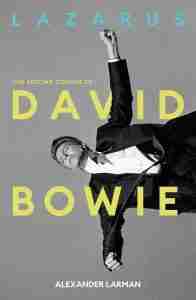
February 21: Alexander Larman on the Resurrection of David Bowie
—
CHURNALISM
Some online publications regularly recycle stories with little original reporting, a practice often called “churnalism,” driven more by digital publishing pressures than independent newsgathering. These pieces typically use vague, click-bait titles that withhold a key detail, only to reveal something readers already know. Many such stories involve Bowie. This section is my attempt to distinguish that material from genuine news and original writing, while acknowledging that even recycled stories may still be newsworthy or of interest.
Bowie and John Lennon Both Wrote Songs About Bob Dylan. Bowie’s admiration of Dylan in “Song for Bob Dylan” and John Lennon’s skepticism in “God” approach Dylan from different angles but both affirm his central importance in popular music.
When Bowie declined a knighthood. Bowie declined a knighthood, explaining that such an honor held no personal meaning for him and would not enhance his life.
Bowie’s Most Cryptic Lyrics Live On in “Ashes to Ashes.” “Ashes to Ashes” revisits Major Tom as a fallen figure whose cosmic adventure becomes an allegory for addiction, disillusionment, and the collapse of fame’s mythology, allowing Bowie to confront his 1970s excesses, replace sci-fi romance with confession, and demonstrate artistic reinvention through controlled new-wave sound and self-reckoning lyrics.
The Early Bowie Single Syd Barrett Liked. In 1967, Syd Barrett reviewed Bowie’s early single “Love You Till Tuesday” for Melody Maker with mild amusement rather than enthusiasm, yet Bowie went on to become a lifelong admirer of Barrett, praising his songwriting, citing The Madcap Laughs as a favorite album, covering “See Emily Play,” performing “Arnold Layne” with David Gilmour, and crediting Barrett as a major formative inspiration.
Nile Rodgers explains how he first met Bowie. Nile Rodgers recalled that he first met Bowie by chance at a club, where they bonded over avant-garde jazz rather than rock, a connection that later led to the creation of Let’s Dance, which revived Bowie’s commercial success in the United States and became the best-selling album of his career.
Bowie Once Had a Bitter Public Feud With This Rock Legend. Bowie had a long-running professional feud with Frank Zappa that stemmed from mutual artistic disdain and came to a head in the late 1970s when Bowie recruited Adrian Belew from Zappa’s band, prompting open hostility, lyrical jabs, and lingering resentment despite later reconciliation between Zappa and Belew.
How a disco legend and a Texan blues guitarist helped resurrect Bowie’s career. After Bowie left RCA in 1983 following modest U.S. chart performance for the Berlin Trilogy and limited label enthusiasm despite Scary Monsters, he soon connected with Nile Rodgers in New York through shared musical interests, setting the stage for a future collaboration.
How ‘The Young Ones’ defeated David Bowie in the charts. Despite Bowie’s continued popularity into the mid-1980s, his 1986 single “Absolute Beginners,” which quickly climbed to number two on the UK charts, was prevented from reaching number one by the Comic Relief novelty hit “Living Doll,” recorded by Cliff Richard and Hank Marvin with the cast of The Young Ones, which dominated the top spot for three weeks.
The greatest hook in pop music. Bowie said that while he valued unconventional songwriting and oddball hooks, the greatest hook in pop music was Brian Eno’s three-note synthesizer solo on Roxy Music’s “Virginia Plain,” which he admired for its simplicity, placement, and atmosphere-shaping power.

Young Americans Redefined Bowie. Bowie’s pivot to “plastic soul” on Young Americans provoked skepticism within the soul scene, but it produced his first US No. 1 single, “Fame,” co-written with John Lennon, underscoring both the controversy and the commercial breakthrough of the period.
—
And with that, “we’ve finished our news…”*
—
*“I’ve heard the news today” is Bowie’s adaptation of the Beatles lyric, which is heard in “Young Americans.” **“We’ve finished our news” is a line from, “Oh You Pretty Things”